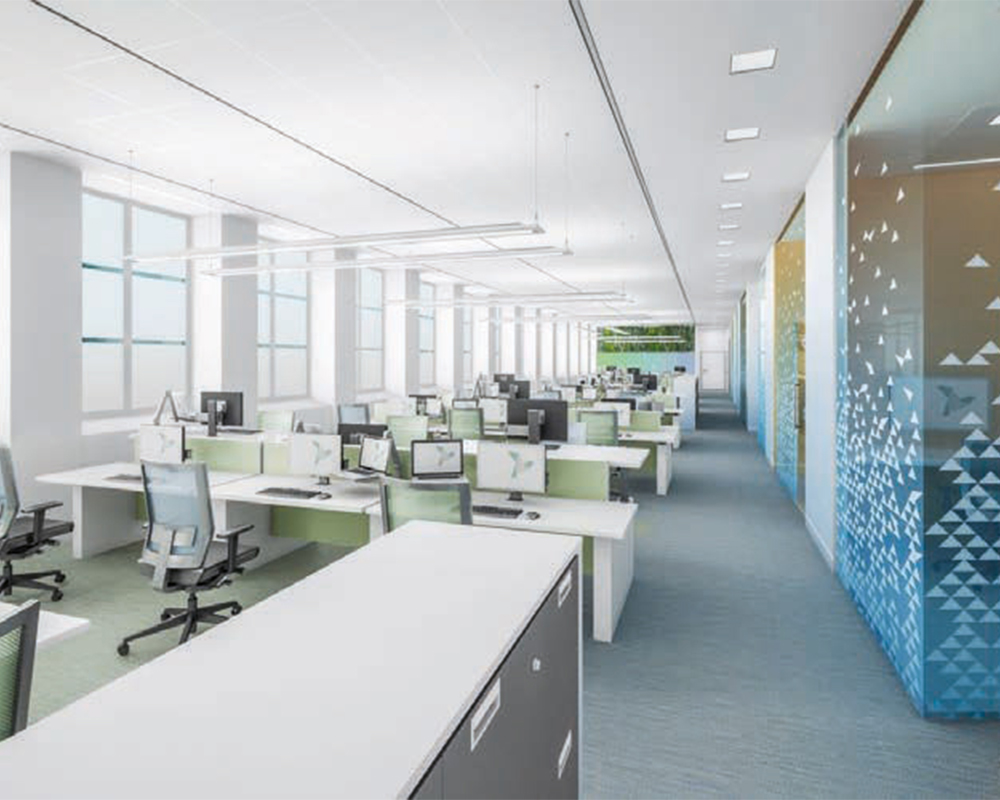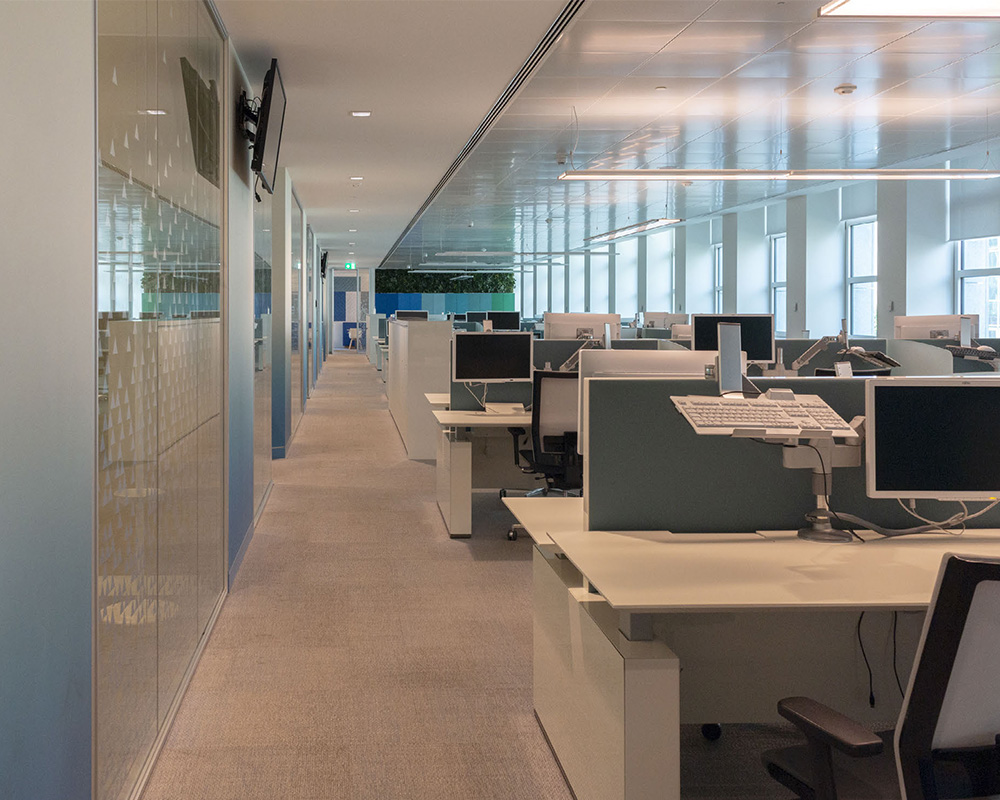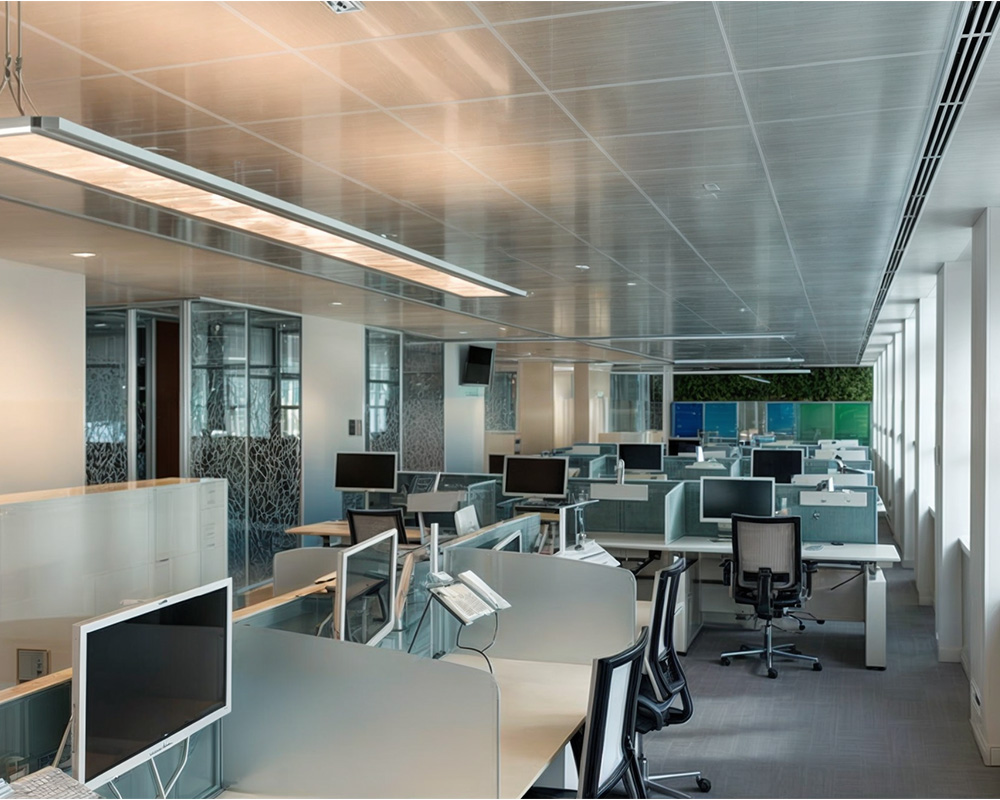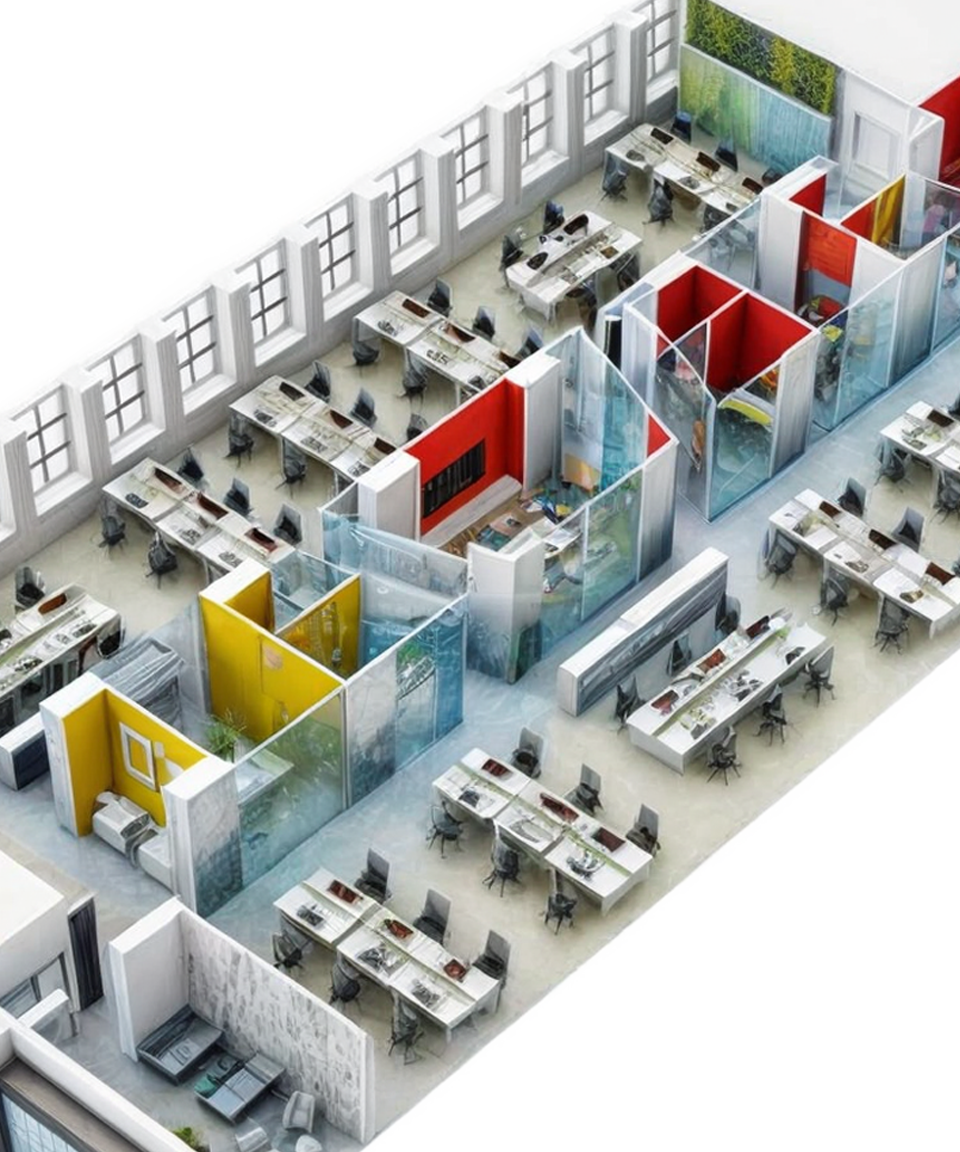
BPM's Bezzi Complex underwent a major transformation aimed at improving the quality of the workspaces and operational efficiency. The intervention focused on the 3rd and 4th floors of Building A3, where the layout was redesigned to foster greater interaction among employees, with flexible areas and ergonomic workstations.
One of the central aspects of the project was improving the building's energy performance, achieved through the upgrading of the electrical, plumbing and HVAC systems, thereby reducing consumption and improving the comfort of the workspaces [1]. The adoption of smart technologies enabled the creation of connected and automated environments [2], able to dynamically adapt to users' needs and optimise resource use.
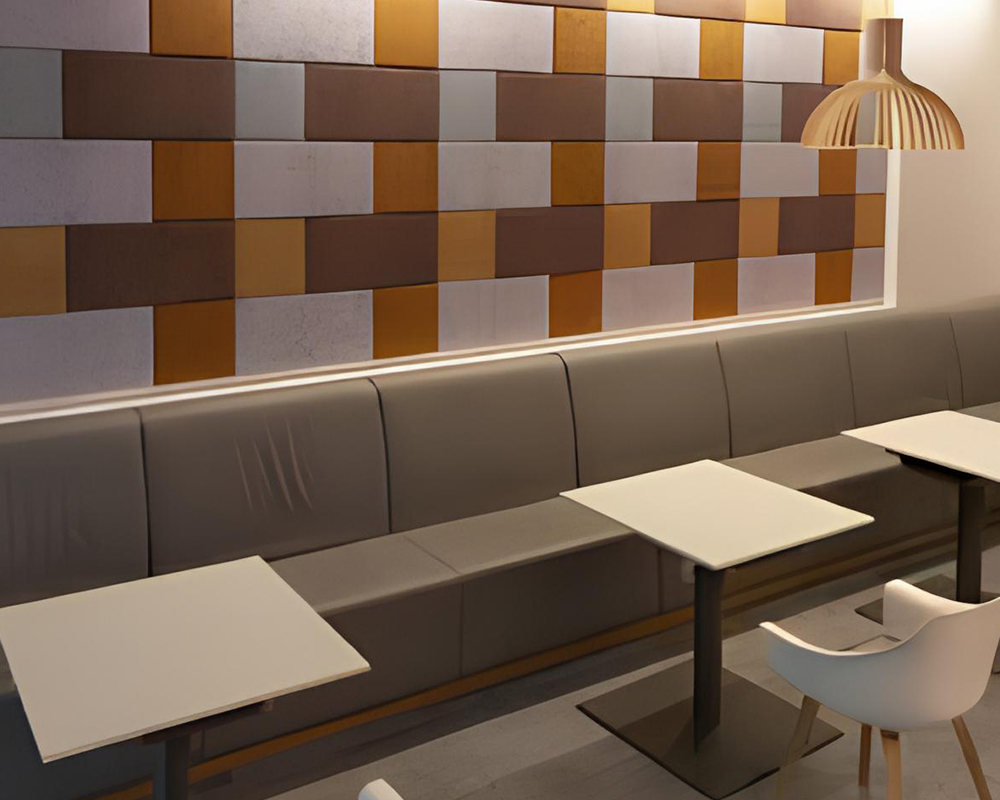
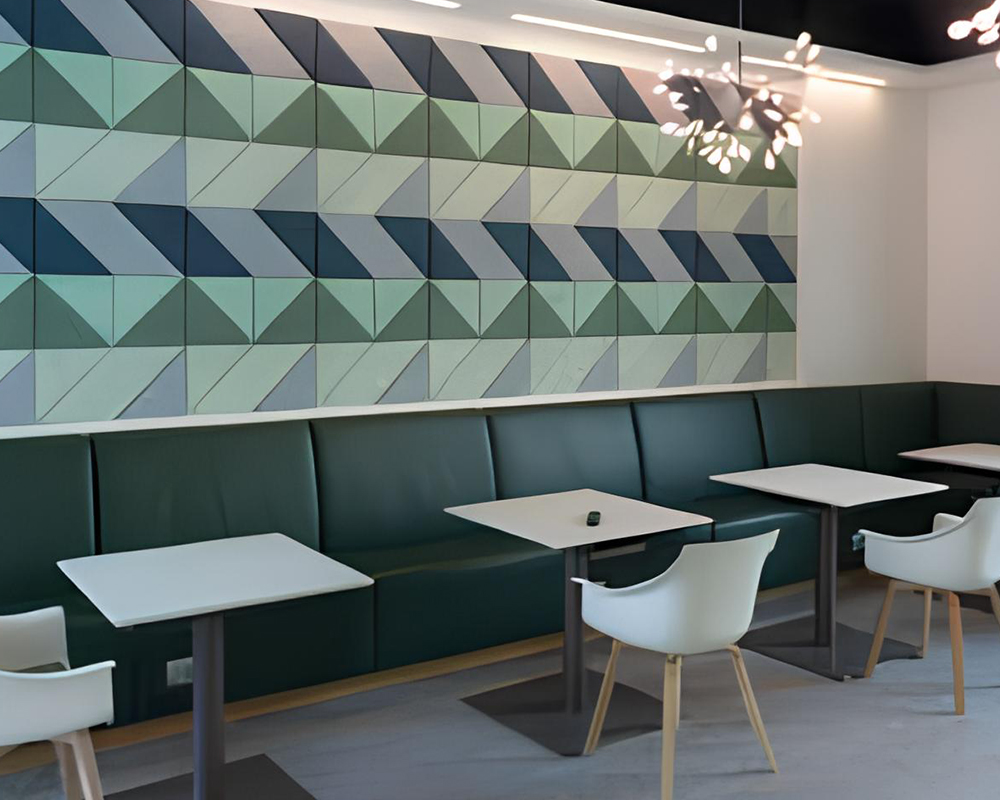
The interior design focused on high-quality materials and a skilful use of natural light, with the integration of glass partitions and sound-absorbing solutions to improve acoustics. The project went beyond a simple renovation, introducing a new workspace model based on flexibility, sustainability and employee wellbeing.
[1] Workspaces
The new office layout was designed to foster collaboration and employee wellbeing. Modular workstations and shared areas encourage teamwork and improve productivity.
[2] Connected and automated environments
Thanks to the upgraded systems and the use of smart technologies, the Bezzi Complex significantly reduced energy consumption, improving thermal comfort and optimising the use of space based on actual occupancy.