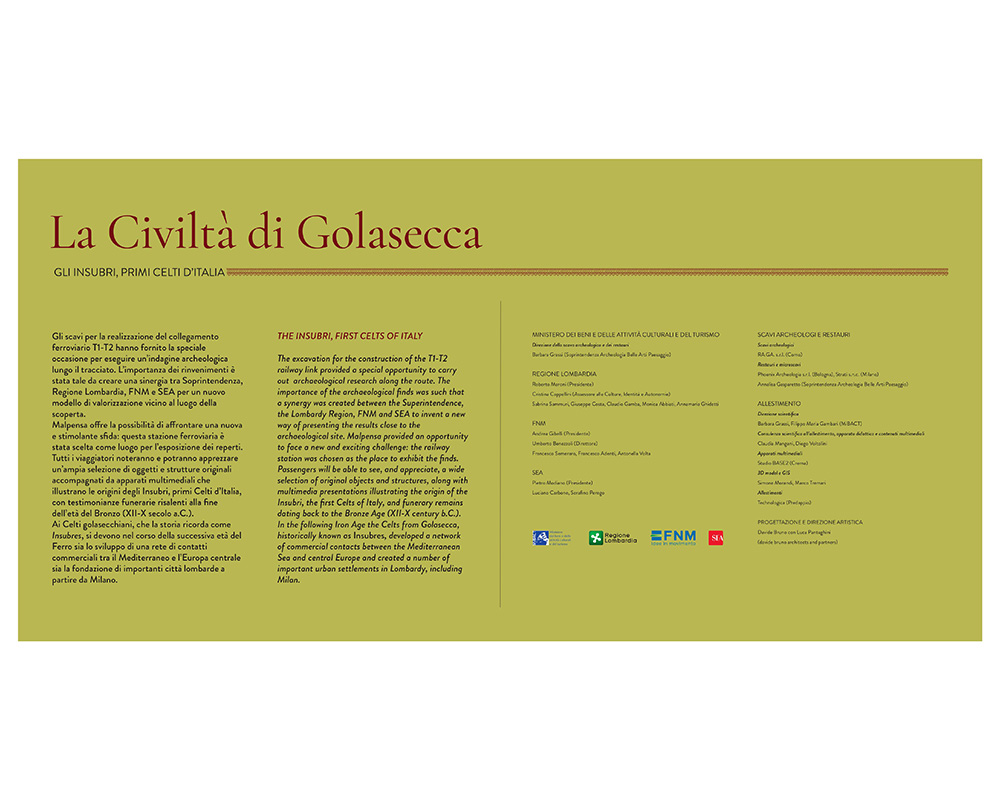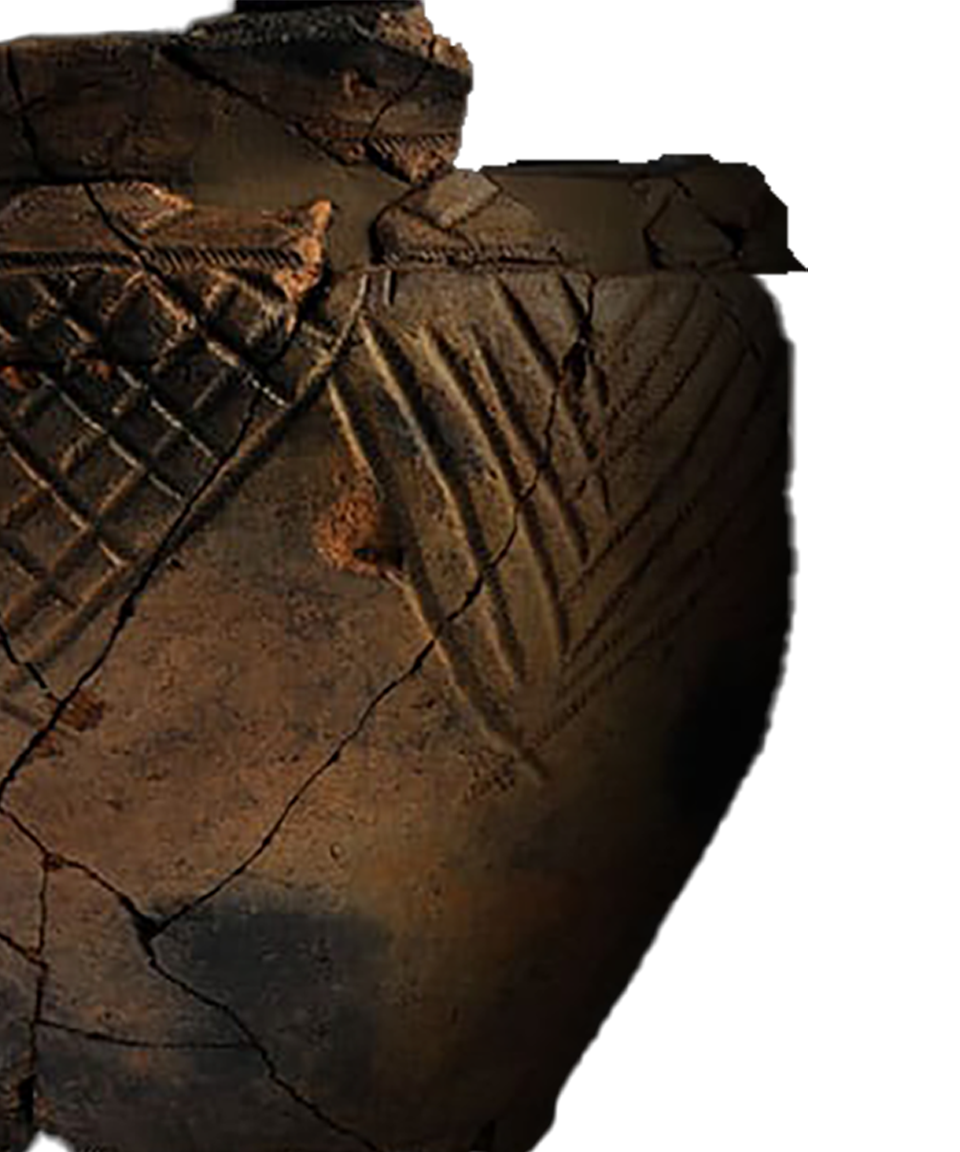
During construction work on the railway line connecting the terminals of Milan Malpensa airport, an unexpected discovery emerged: remains dating back to the Golasecca Civilisation, one of the earliest Celtic populations in Italy. This find opened the door to a unique project: taking history out of traditional museums and making it an integral part of a place of everyday transit.
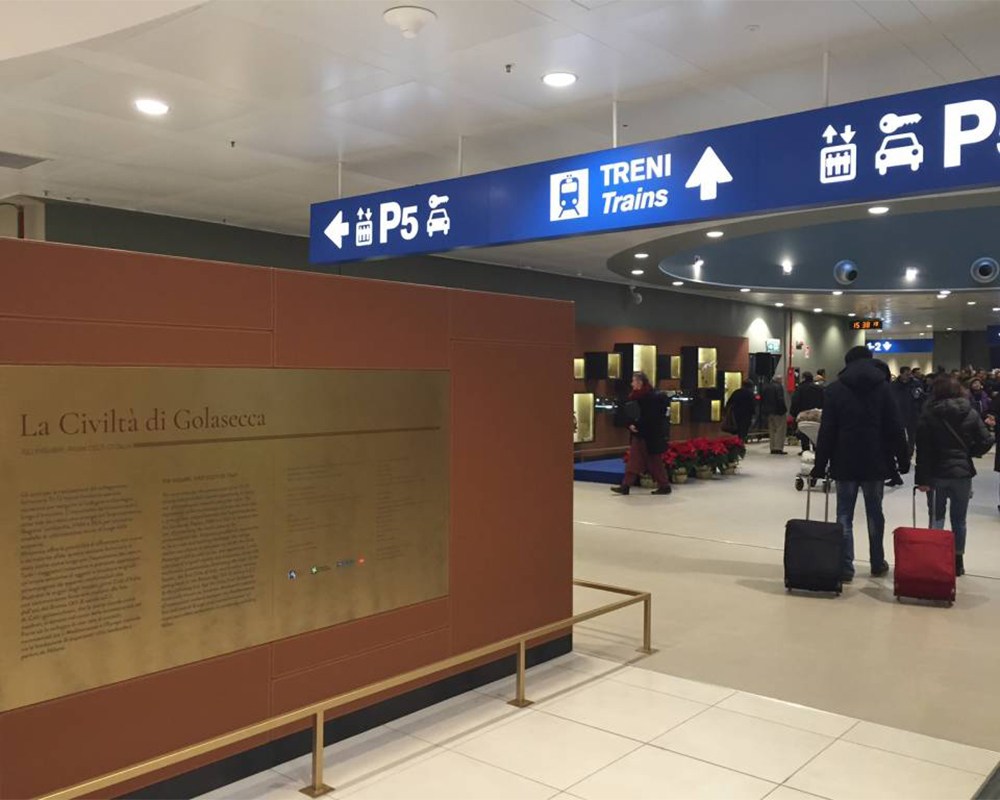
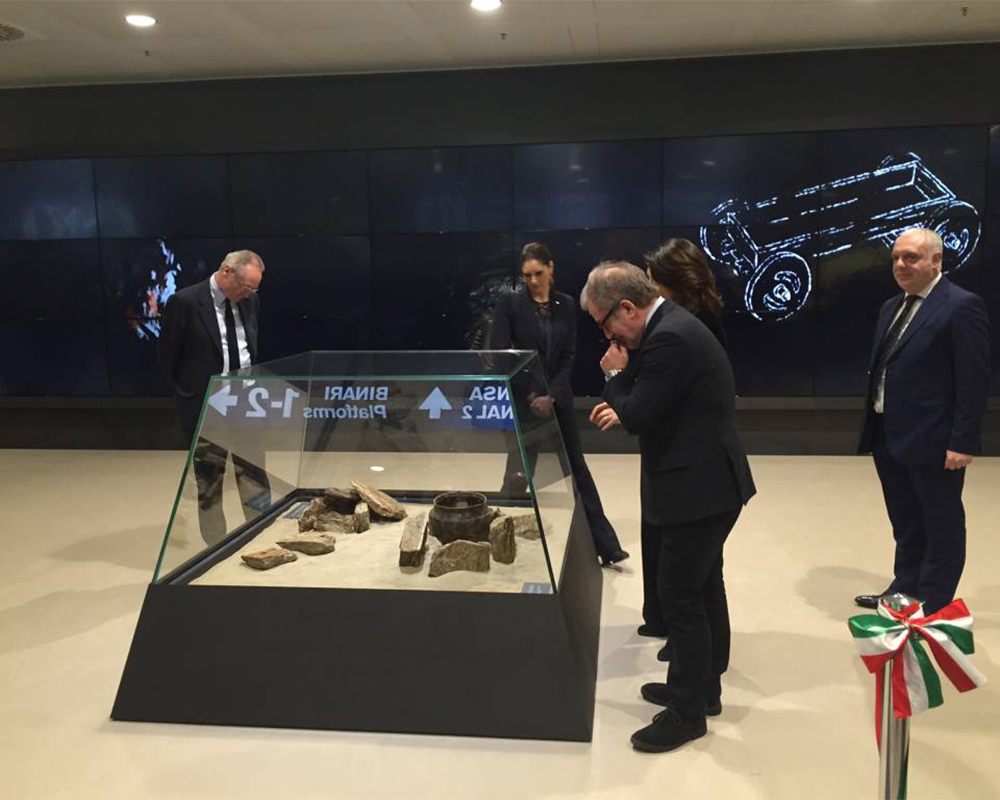
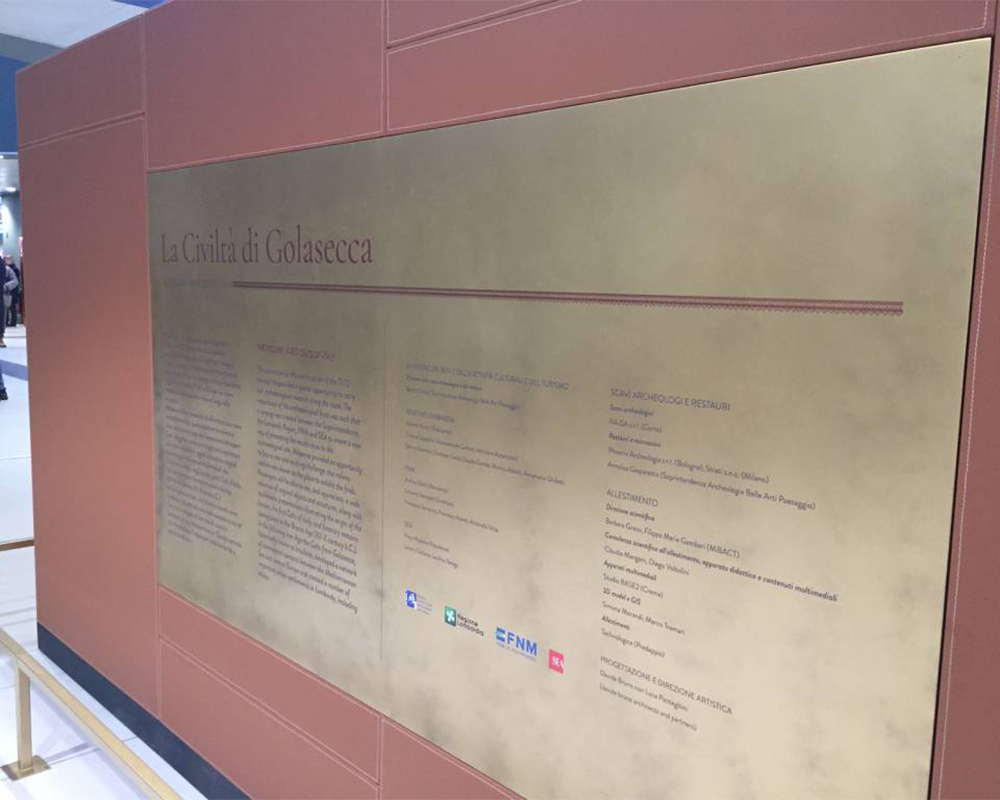
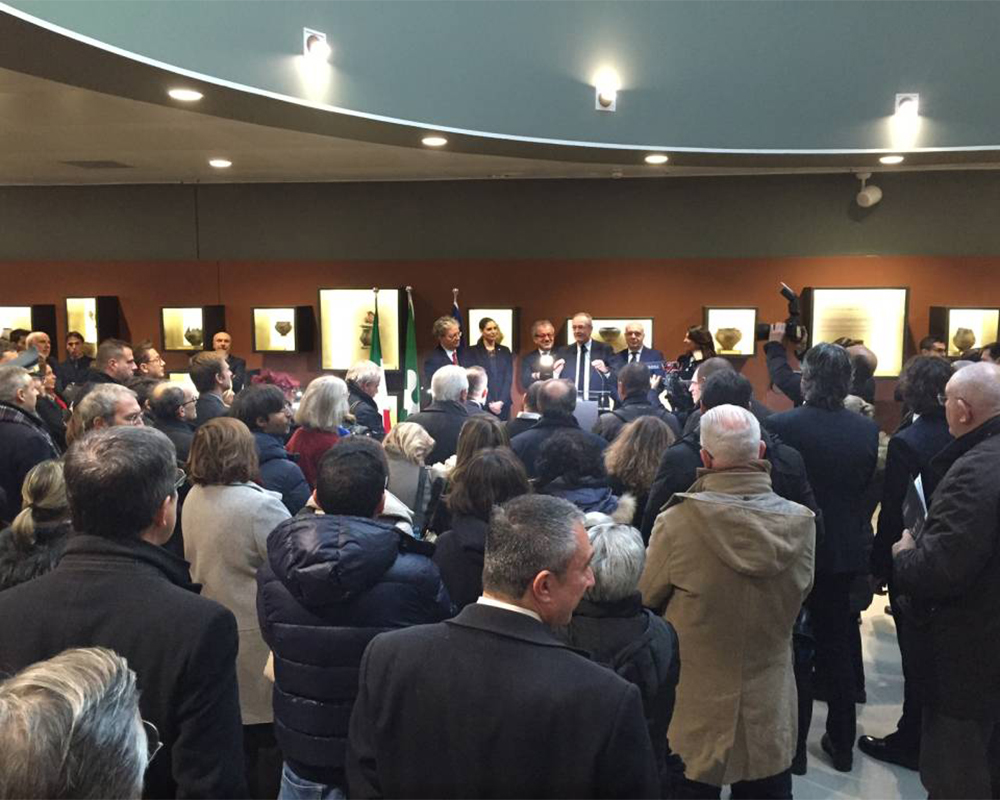
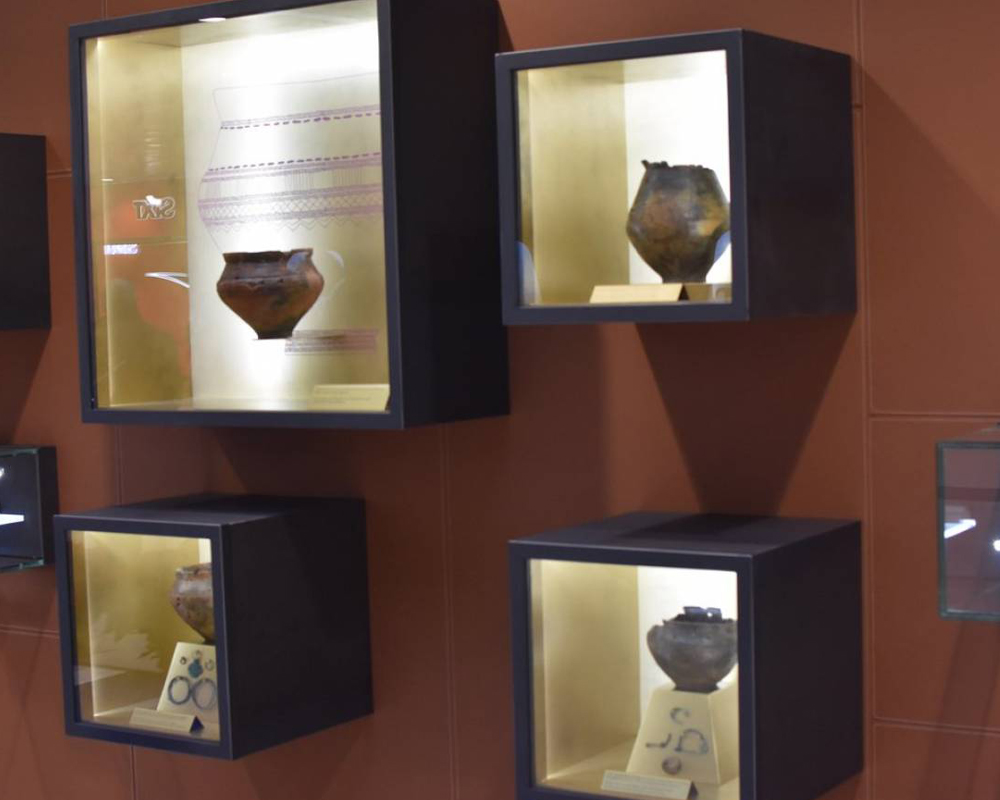
The Terminal 2 railway station was transformed into a permanent exhibition, accessible 24 hours a day and designed to capture the attention of even the most hurried travellers. The exhibition combines refined display cases, scenographic walls and digital installations, telling the story of the daily life, funerary rituals and trade of the Golasecca Civilisation.
The design placed great emphasis on the visitor's sensory experience [1]: the exhibition route is characterised by a careful use of materials, lighting and tactile surfaces. The tobacco-coloured walls and the brass-and-glass display cases evoke a connection with the earth and the past, while multimedia devices provide insights that are intuitive to access. The result is a “diffused” museum [2], able to combine scientific rigour, accessibility and an iconic visual impact, transforming a place of transit into an open window onto history.
[1] Sensory experience
Integration with the railway station makes the exhibition accessible to an extremely wide audience, offering immediate storytelling through digital media and scenographic displays.
[2] “Diffused” museum
The exhibition was designed to engage visitors on a sensory level. The finishes evoke earthy tones, while carefully designed lighting highlights the artefacts and guides the eye. Digital screens and three-dimensional models enrich the route with dynamic, interactive content.