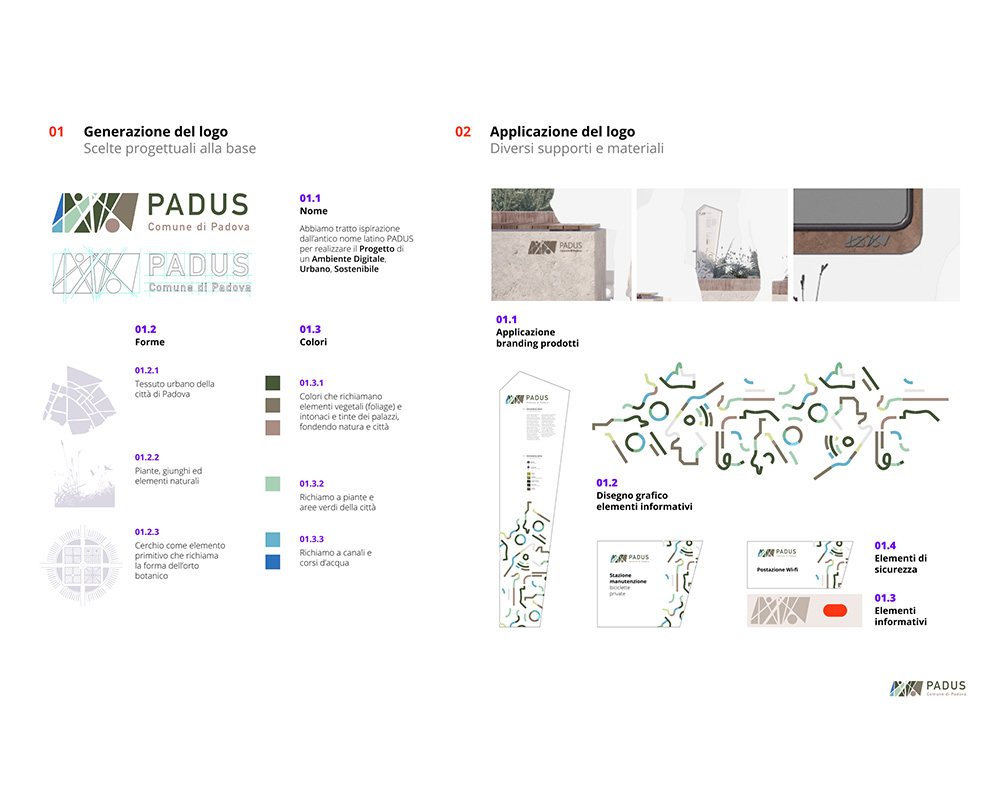
The PADUS project represents an innovative transformation of urban space, blending nature and technology to make the city more connected and liveable. The idea stems from the desire to enhance Padua's historical heritage through a street furniture system able to integrate harmoniously with the existing context.
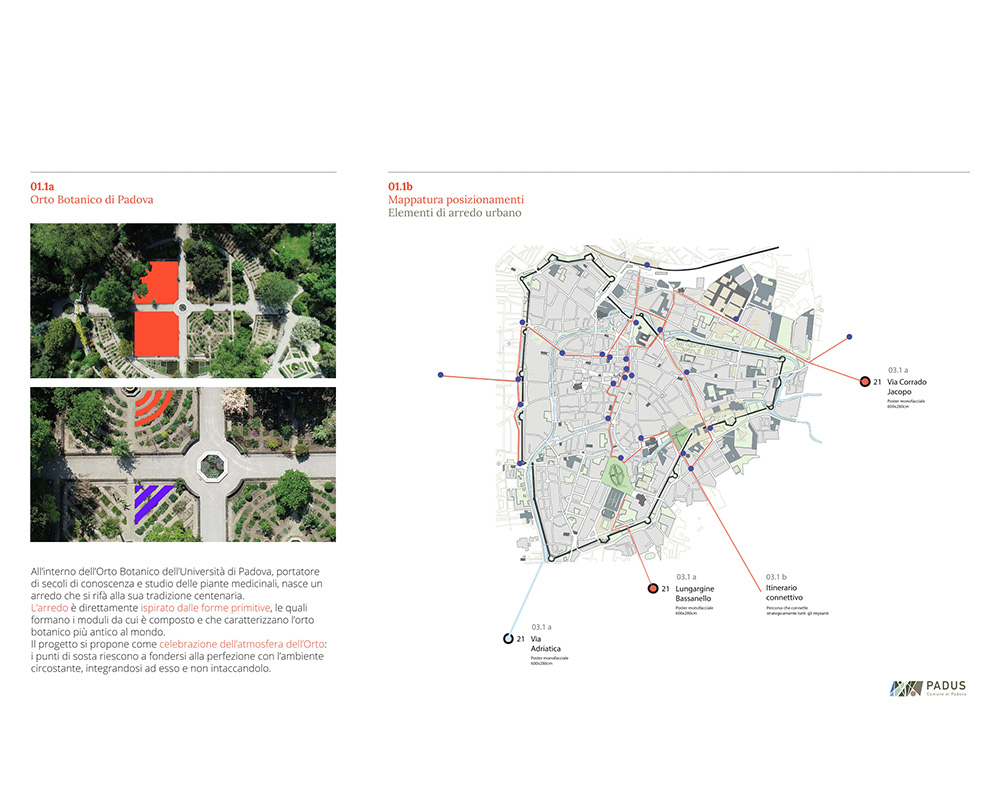
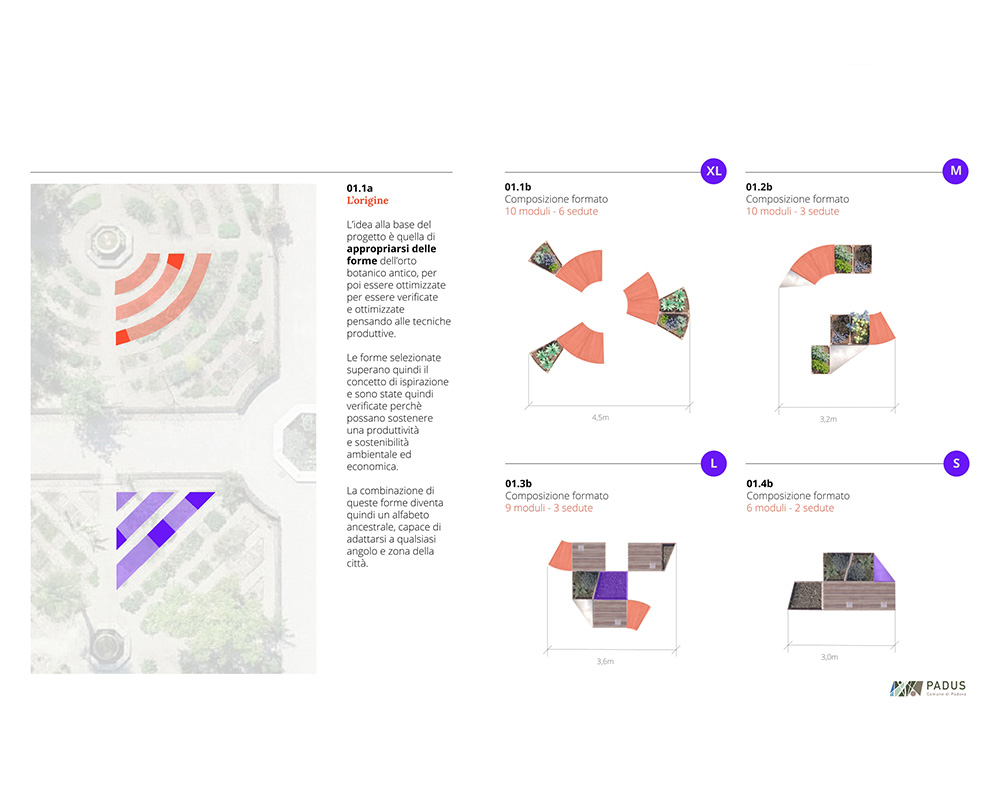
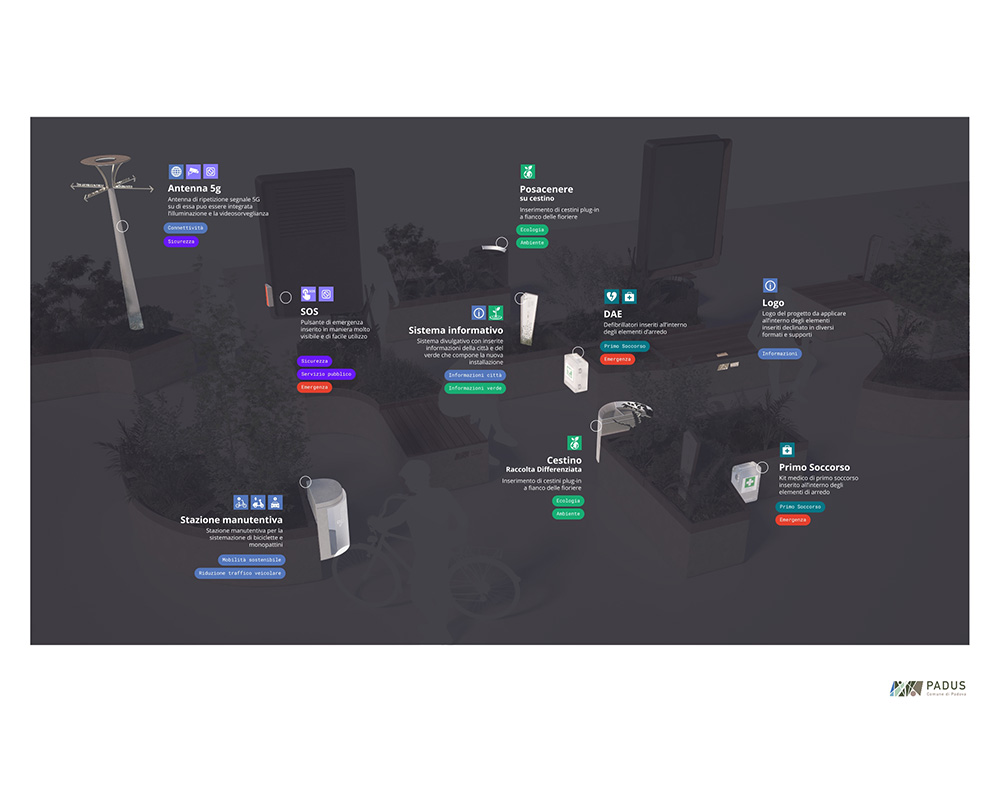
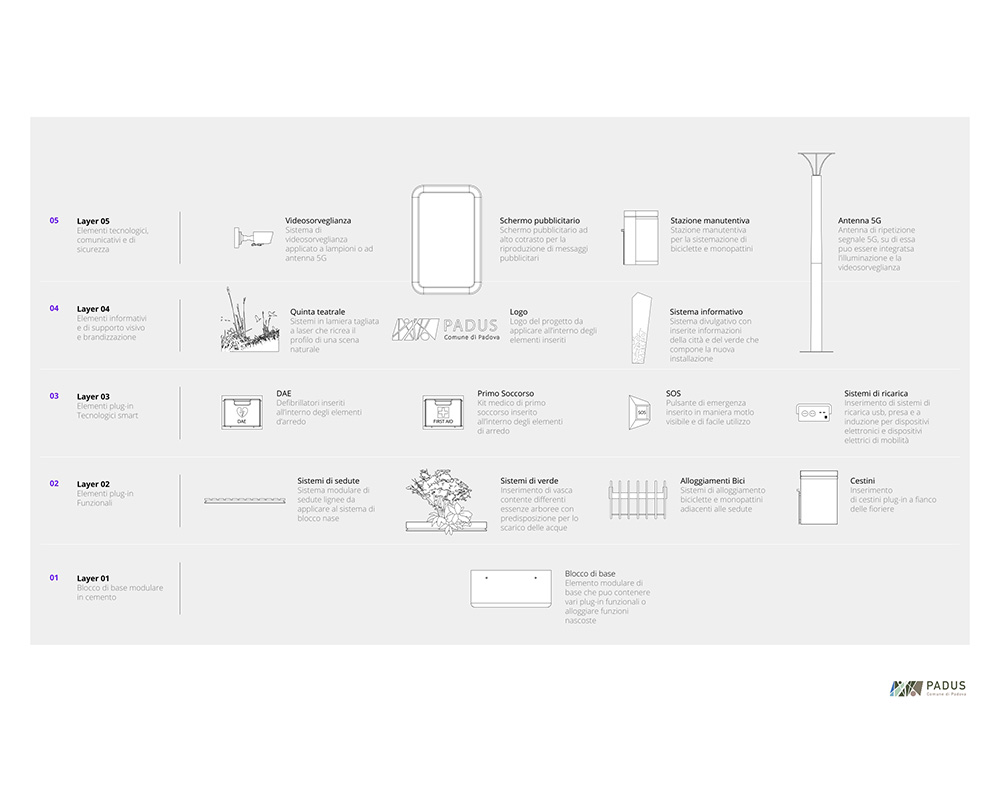
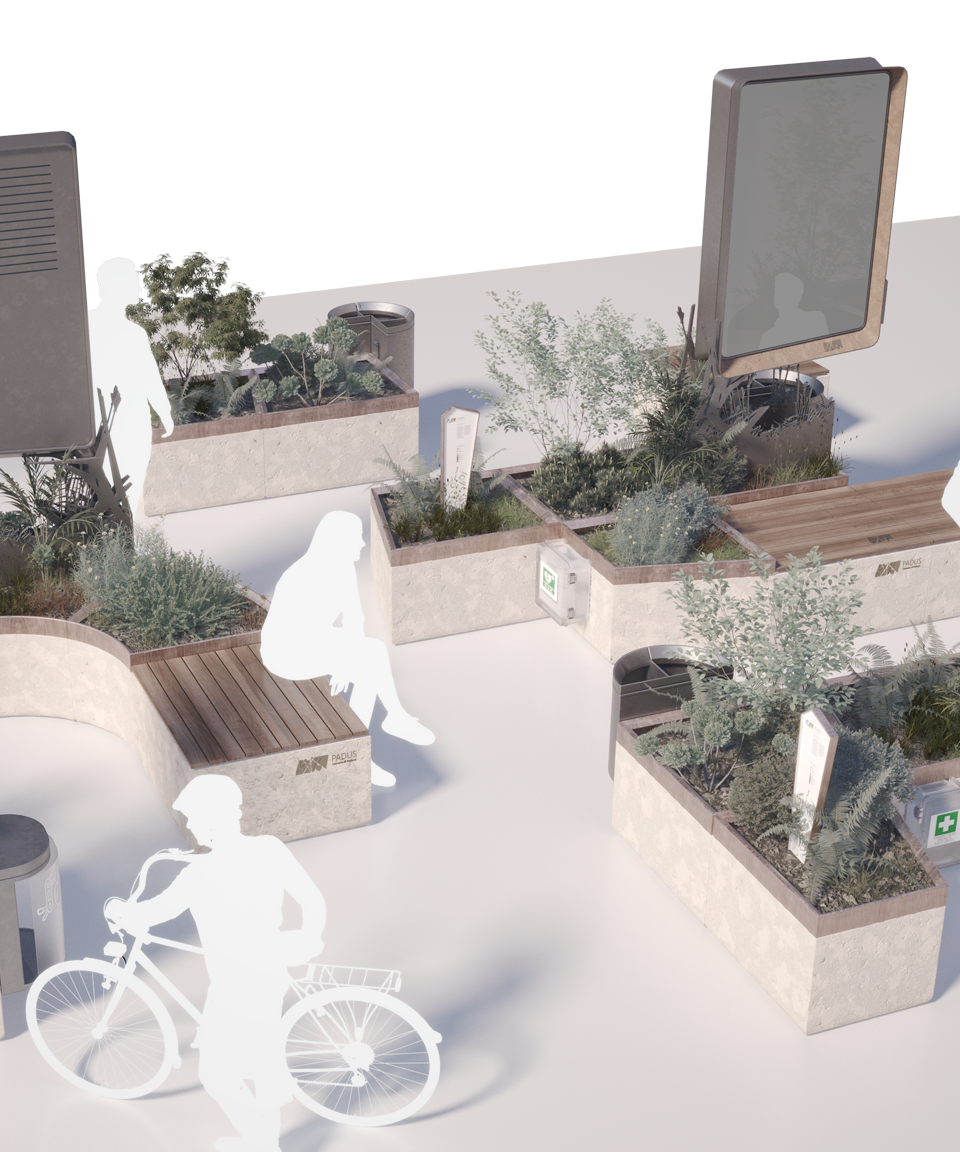
At the heart of the project is the Digital Planter Circuit [1], a network of green installations that combines contemporary design with urban functionality. These modular structures, inspired by the geometry of the Orto Botanico (Botanical Garden), house plants selected for their ability to improve air quality and enrich the cityscape. Each planter is fitted with digital and analogue screens [2], designed to communicate real-time information and offer innovative advertising opportunities without altering the aesthetics of the place, alongside institutional messages and cultural events. These elements are integrated with an urban greenery plan, which introduces new tree species and a system for managing plant life according to the seasons.
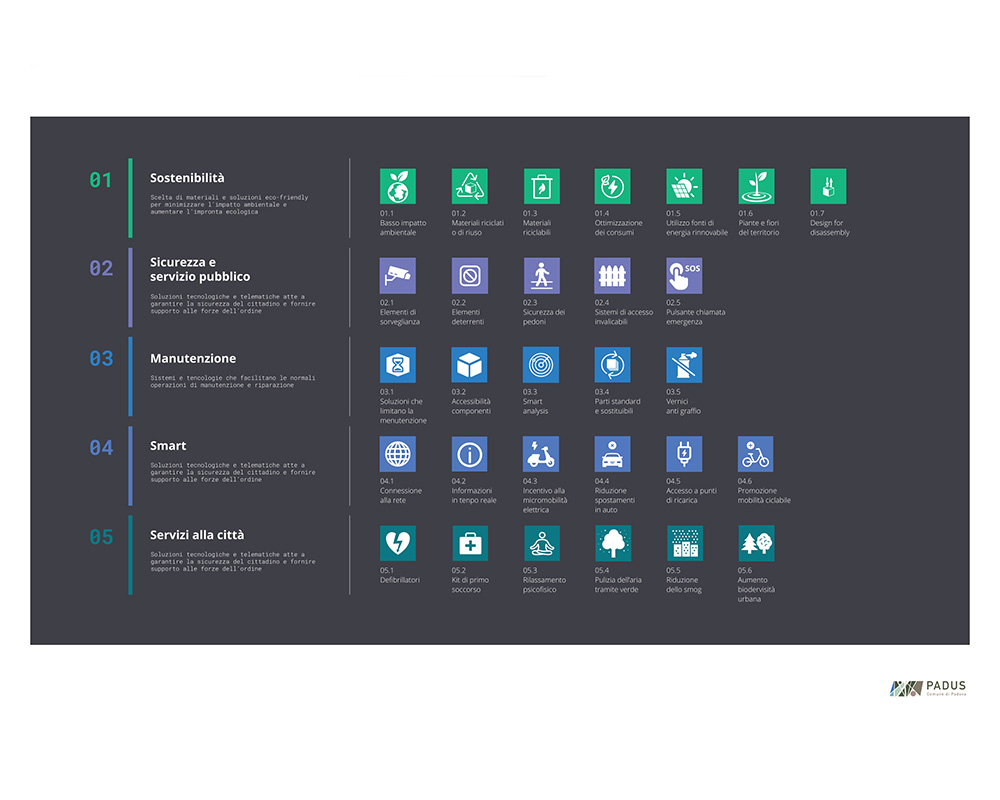
PADUS is also a model of sustainability and inclusion: an ecosystem of active public spaces, where technology does not intrude but enriches the city experience, fostering community participation and engagement.
[1] The Digital Planter Circuit
The planters are not simply decorative elements, but genuine “green showcases” housing a curated collection of plant species. Each module is designed to change appearance with the seasons, transforming the city into an open-air natural history museum.
[2] The screens
The use of low-energy displays and advanced technologies ensures a reduction in environmental impact, in line with the project's green vision.